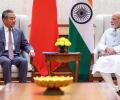
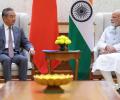
China's Foreign Minister Wang Yi expressed China's anticipation for Prime Minister Narendra Modi's visit to the Shanghai Cooperation Organisation (SCO) summit, emphasizing the importance of strong India-China relations and mutual cooperation.

The development comes after the army said India lost an officer and two soldiers during the violent face-off, while there were casualties on the Chinese side as well in the Galwan Valley in eastern Ladakh on Monday night, the first such incident in the last 45 years that reflected massive escalation in the five-week border row.

China on Wednesday said the Chinese and Indian militaries are implementing the resolutions concerning the disengagement in eastern Ladakh along the Line of Actual Control (LAC) in an 'orderly' manner.

'It is because of the bravery of Colonel Santosh Babu and his men that we have not seen a violent escalation anywhere else along the LAC.'
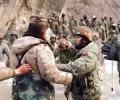
According to the 'Military and Security Developments involving the People's Republic of China' report 2023: "Since early May 2020, sustained tensions along the India-China border have dominated the Western Theater Command's attention."

Defence Minister Rajnath Singh has conveyed to his Chinese counterpart Admiral Dong Jun that India and China should maintain the positive momentum in the bilateral ties and avoid adding new complexities.

The two sides had started coordinated patrols in the first week of the month after completing disengagement in both Demchok and Depsang in the last week of October.
Former Army chief Gen M M Naravane (retd) said India-China ties are "on the mend" with initiatives announced at political, diplomatic and military levels. He expressed hope that China will reciprocate India's goodwill as they move forward in discussing the boundary question.
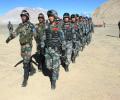
"We hope the Indian side will move towards China and through concrete actions implement the consensus and continue the close communication through military and diplomatic channels to jointly push for the de-escalation on the border region," Zhao said.

But there is a bigger issue that both of us have brought forces close up and in that sense there is a militarisation of the border, he said.
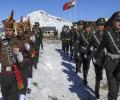
The major general-level meeting discussed ways to implement the disengagement of troops from Galwan Valley as agreed during high-level military talks between the two sides on June 6. The Indian delegation at the talks was led by Leh-based 3 Infantry Division commander Major General Abhijit Bapat. The two sides held Major General-level talks on Tuesday as well.
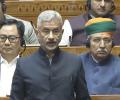
Jaishankar said India-China ties have been abnormal since 2020 when peace and tranquillity in border areas were disturbed due to Chinese actions.
The last time the Chinese military had taken Indian soldiers captive was in July 1962 after a clash in Galwan Valley.
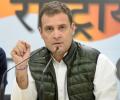
He highlighted how the ministry of foreign affairs of People's Republic of China in its statement made a mention of the Galwan Valley, but the Indian external affairs ministry did not do so.

A meeting with Chinese President Xi Jinping on the sidelines of the SCO summit is being planned.

The state-run Global Times newspaper quoted the People's Liberation Army Western Theatre Command spokesperson as saying that "Indian troops again crossed the line of actual control in the Galwan Valley region and purposefully launched provocative attacks, leading to severe clashes and casualties."

National Security Advisor Ajit Doval on Monday emphasised the need to counter terrorism in all its forms for overall regional peace and stability during a meeting with Chinese Foreign Minister Wang Yi in Beijing.
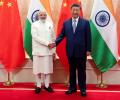
Prime Minister Narendra Modi and Chinese President Xi Jinping vowed to work towards a "fair, reasonable, and mutually acceptable" resolution of the festering boundary issue and pledged to work towards stabilising global trade.

On Saturday, Ministry of External Affairs spokesperson Randhir Jaiswal told the media in New Delhi that the Indian Army has commenced verification patrolling at Depsang, the second friction point in eastern Ladakh.

Sources had earlier said that the areas and patrolling status were expected to be moved back to pre-April 2020 level.

Dominic Xavier offers his take on China fielding a soldier involved in the Galwan Valley clash as a torchbearer for the Beijing Winter Olympics.

Chinese President Xi Jinping, who made a rare visit this week to the restive Xinjiang region which borders Ladakh, met the troops and officers stationed there and praised their "outstanding contributions" to the border defence and stabilisation of the volatile province.
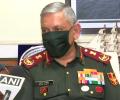
'Chinese soldiers don't have much experience of fighting in these kinds of areas and operating in this kind of terrain'
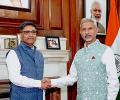
The 59-year-old Vikram Misri assumed charge of the key position at a time India is looking to navigate various geo-political challenges, including its frosty ties with China following the lingering eastern Ladakh border row and the consequences of the Russia-Ukraine conflict.

Both sides have completed creation of a buffer zone of three kilometres in the three friction points of Galwan Valley, Gogra and Hot Springs as part of a temporary measure aimed at reducing the possibility of any confrontation.
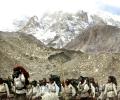
The New York Times had reported that a few Indian soldiers were missing in action after the violent face-off between Indian and Chinese troops in the Galwan valley.
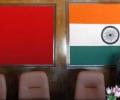
Contours of talks are being chalked out and these can take place at multiple levels including Joint Secretary- level. There is still no official word on the proposed meet from both sides.
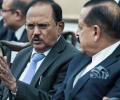
National Security Advisor Ajit Doval is likely to travel to Beijing within the next few weeks to lead the Indian delegation at a new edition of the Special Representatives dialogue on the larger boundary question that will be held after a gap of nearly five years, authoritative sources said.

The Indian Army began patrolling at Demchok on Friday, days after Indian and Chinese troops completed disengagement at the two friction points in eastern Ladakh, Army sources said.

Defying the COVID-19 social distancing norms, huge crowds gathered to pay respects to the soldiers amid emotional moments.
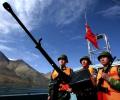
"As far as I know, China presently has not detained any Indian personnel," Chinese foreign ministry spokesman told a media briefing in Beijing while answering questions on the tense standoff between the Indian and Chinese troops at the Galwan Valley.
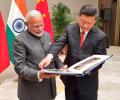
China's foreign ministry on Monday parried questions on a possible meeting between Prime Minister Narendra Modi and President Xi Jinping on the sidelines of the BRICS summit in Russia this week.

In the meeting, Doval conveyed to Wang that peace and tranquillity in border areas and respect for the Line of Actual Control are essential for return of normalcy in bilateral ties, according to the ministry of external affairs.
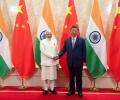
Prime Minister Narendra Modi and Chinese President Xi Jinping held bilateral talks focusing on economic ties and global stability amid trade tensions and the aftermath of the Ladakh border row.
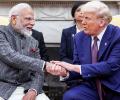
India has firmly rejected any involvement of a third party in its border dispute with China, declining an offer of mediation from US President Donald Trump. Foreign Secretary Vikram Misri emphasized India's commitment to resolving bilateral issues through direct dialogue, stating that New Delhi has always maintained a bilateral approach in dealing with such matters. This stance underscores India's position that the border dispute with China should be addressed through direct negotiations between the two countries.

The T-72 tank with five soldiers on board sank due to flash floods while they were crossing the river.

The Indian Army has commenced a verification patrolling at Depsang, the second friction point in eastern Ladakh, the government said on Saturday.
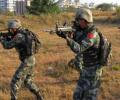
This is the first time China has commented on the casualties. Though China has not revealed its casualty figure, there were reports that a commanding officer of the Chinese army was among those killed in the clashes. There is no official confirmation about it.

Nepal said it was confident that both its "friendly neighbours" India and China will resolve their border stand-off at the Line of Actual Control through peaceful means.

India said it is strongly committed to ensuring its sovereignty and territorial integrity.
